Operations handover on day one. At Day 90, the entire structure flips — lease, guaranty, deposit, arrears plan. Both sides locked in.
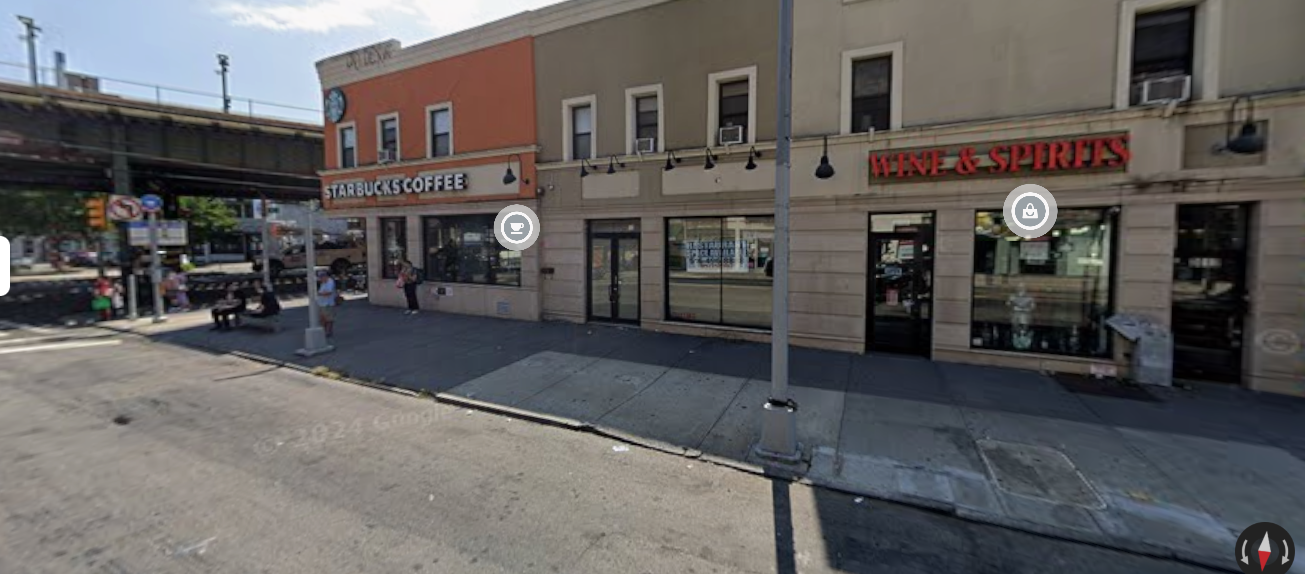
The block is alive on either side. In the middle sits a licensed dispensary that reads as closed — no awning, no glow, no reason for anyone walking past to slow down. It feels like the block forgot it was there.
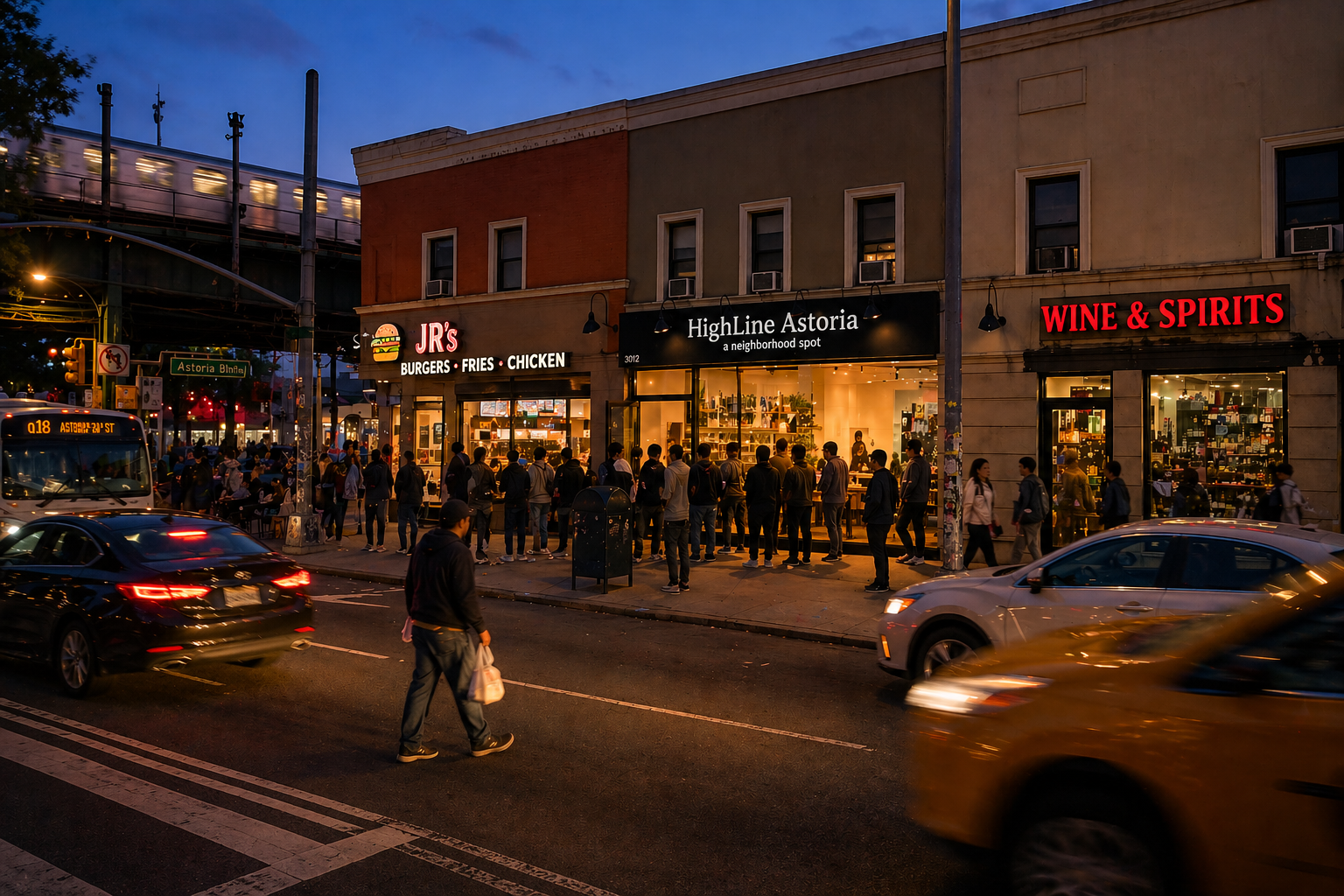
Illuminated awning. A line at the door. The Q18 pulling in. The block finally working as one destination instead of two with a dead spot between them.
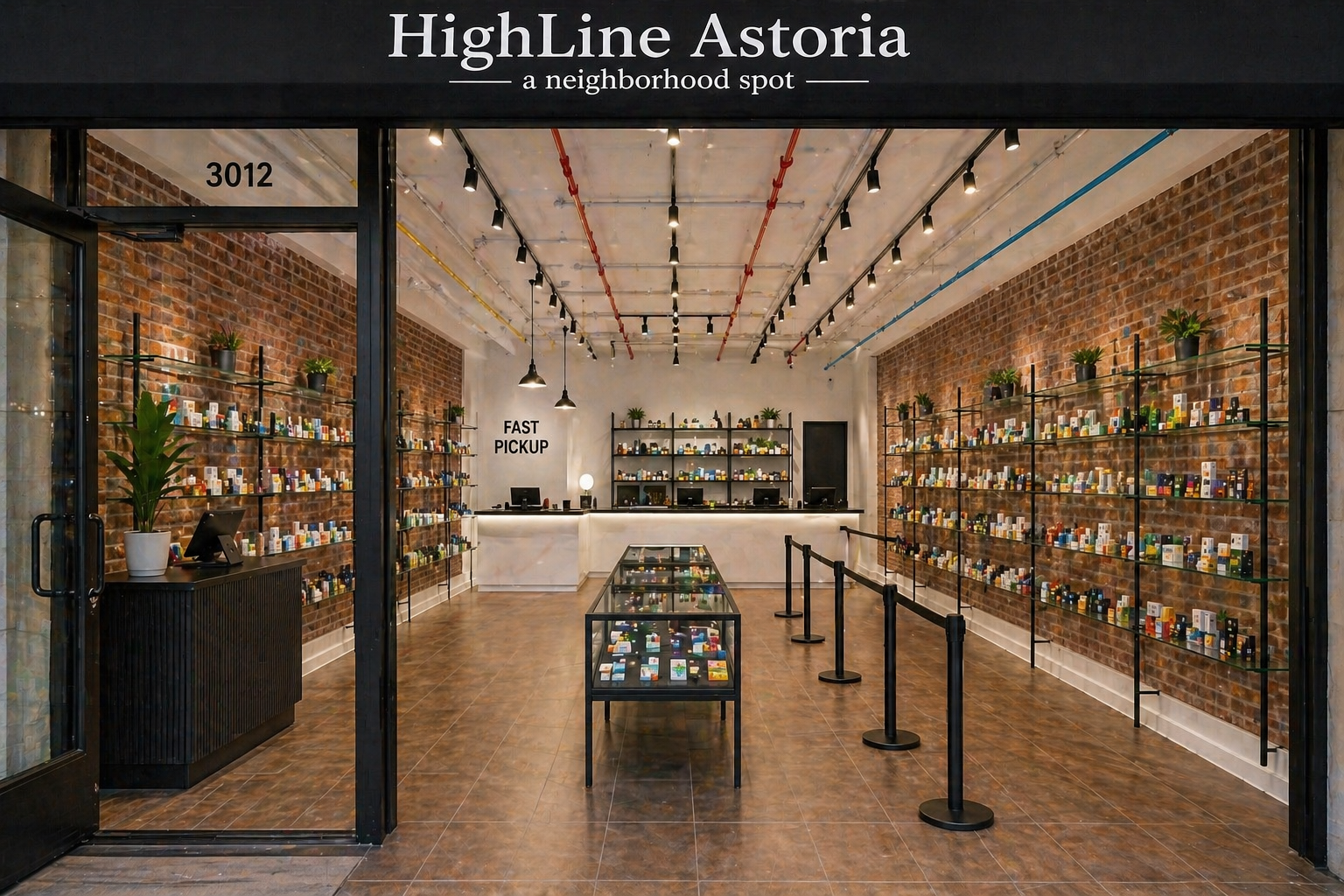
The dispensary at 30-12 Astoria Blvd has been mismanaged into roughly $100,000 in landlord-side arrears — back rent, property tax, and unpaid utilities. No signage. No marketing. A guarantor seeking release. Here's the proposal: a new management company — with the license holders' assent already in place — takes over operations on day one, has the space looking like the renderings on this site within five days of the keys, continues upgrading through the 90-day window, and at Day 90 the entire structure flips — lease assigned to a clean entity, fresh personal guaranty replacing Tim Derham's, fresh security deposit posted, the existing deposit reverting to you against the arrears, and a written monthly payment plan beginning. Both sides locked in at signing. The only out is a license-disrupting event. The practical alternative for the property is months of vacancy with the existing arrears unresolved.
Thousands of commuters wait a few feet from this door every weekday. Today they don't even know it's a dispensary. Post-relaunch, they're walking out with a bag and catching the Q18.
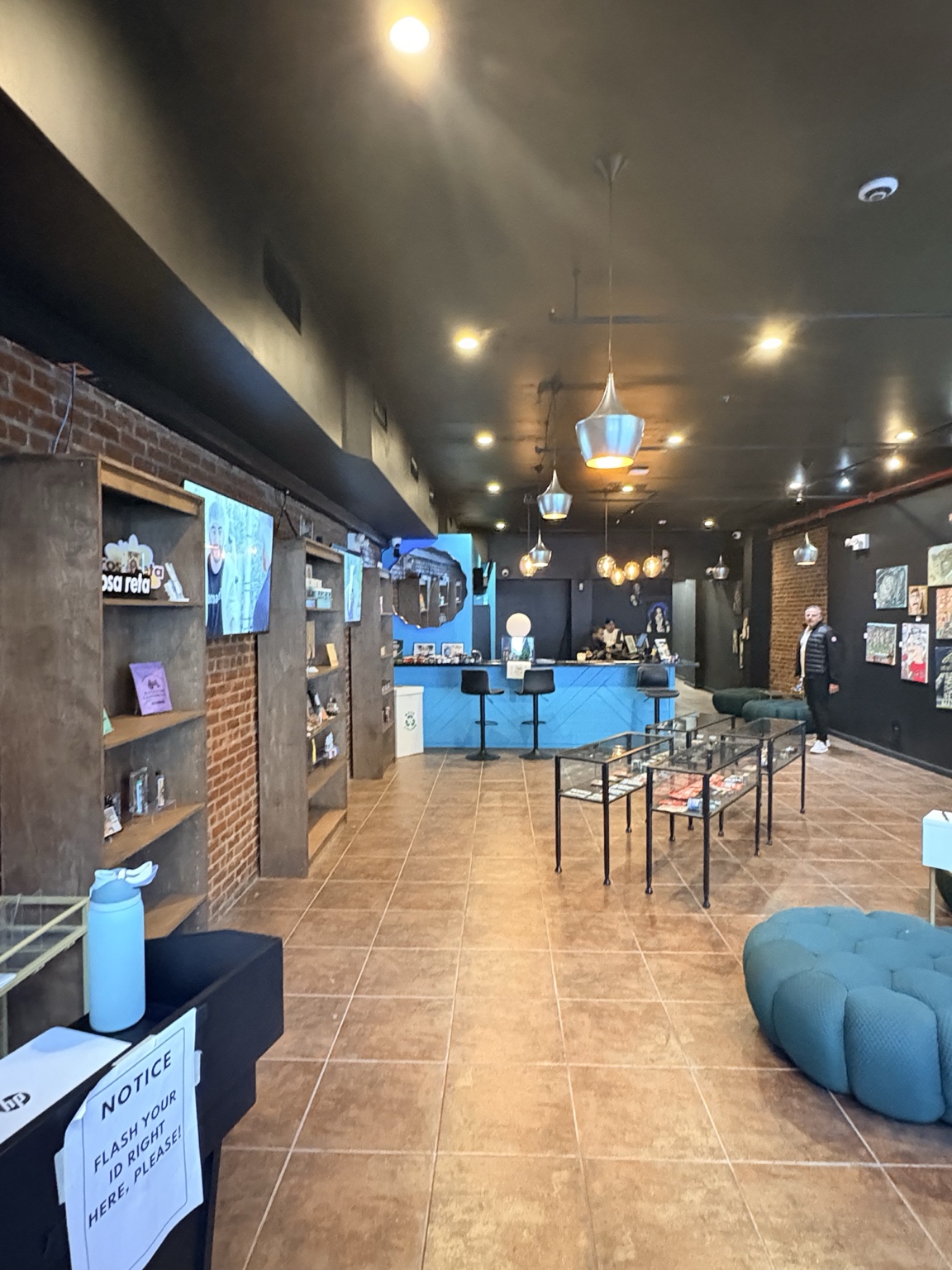
Cash only. No exterior sign. No marketing. Anyone who finds the place finds it despite the room, not because of it. Quiet shelves, dim corners, the feeling that nobody's home — even when someone's behind the counter.
Warm light on exposed brick, walls of full shelves, a fast-pickup lane built for commuters coming off the bus and the N/W. A room people walk in for, not just toward.
This isn't a hopeful pitch about future demand. The customers are already at the door — five MTA bus routes stop in front, the N/W subway is one block away, and 37,000 people in the immediate ZIP code over-index on every metric that matters for cannabis retail.
Comparable Astoria dispensaries that are actually run are doing well into six figures a month. We're targeting $100–150K monthly within ~6 months of relaunch, scaling from there. At that level, rent is comfortably covered with substantial margin, the arrears are paid down on schedule, and you have an anchor tenant for the rest of the lease term — full projections in the proposal doc.
A binding agreement signed now, with both sides locked in. The new management group takes over operations of the store on day one and runs it through the 90-day window, doing the Phase 1 build-out and getting marketing in the ground. At Day 90, the entire structure flips in a single coordinated step. Phase 2 — strategic capital — comes after.
Landlord-side only — back rent, utilities, and property tax. No surprises, no hidden line items. Vendor balances, service agreements, and prior operator obligations are not in this scope; they remain with the existing operating entity.
| Obligation | Estimated | Resolution at the flip & after |
|---|---|---|
| Back rent | $48–64K | Existing deposit reverts to landlord at Day 90 + monthly payments after |
| Unpaid utilities | $10–15K | Direct payment from operations post-flip |
| Property tax arrears (if any) | TBD | Folded into the monthly payment plan |
| Total landlord-side arrears | ~$100K | Targeted resolution: 6–9 months post-flip |
Out of scope: vendor balances, service-provider agreements, prior staff disputes, payroll-tax arrears, software/POS arrears, and any other operator-level obligations. The new tenant does not assume these. They remain the responsibility of the existing operating entity. They are not the landlord's concern, and they do not affect this transaction.
Full transparency on how the business is structured financially — and where you sit in the priority stack.
Rent is the first check written every month — before payroll, inventory, our loan repayment, or our management fee. Your interests are ahead of ours, full stop.
What we put in for signage, inventory, marketing, and stabilization is documented as a senior secured loan to the business. We get paid back from revenue — after operating expenses are covered.
A 10% management services fee on gross revenue covers staffing, compliance, financial controls, vendor management, and operational support. Standard, transparent, and after rent.
Back rent is paid from available cash flow once operations stabilize — not as a gift from us, but from a business that's actually generating revenue. That's why this works long term.
Everything we've said above, mapped to dates. If we miss these, you have every right to come after us.
This is not a 90-day trial. Both parties commit at signing. The only condition under which the new entity can withdraw before the flip is a license-disrupting event affecting the existing licensees during the 0–90 window.
There is no financing contingency. There is no inspection-based out. There is no general "good faith" termination right. The deal we sign is the deal we close — the only carve-out is a regulatory event at the licensee level that none of us can underwrite.
Execute a binding forward-starting lease, signed now, with the flip at Day 90 on the structure above. Apply the existing security deposit toward landlord-side arrears at the flip. Forbearance on the remaining balance against the written eroding payment plan. No eviction proceedings during the 0–90 window or post-flip stabilization, provided current rent and arrears payments continue per schedule. A defined, narrow out clause — license-disrupting events only. If triggered, the deal terminates and both sides revert to status quo.
What's on this page is the headline. The full PDF is the structural document — operations handover, Phase 1 build-out, the Day-90 flip, Phase 2 strategic capital, and the landlord-side arrears resolution in full.
What's on this page is the headline argument. The PDF is the full case — every number, every milestone, every commitment, in writing.
One email, one copy of the proposal, no list, no follow-ups unless you ask.